Over the course of 250 years, millions of people from Africa were kidnapped and sold into slavery in the Americas. Roughly two million of these people were sold into Brazil. They brought with them their languages, music, gods (including Allah, since a good fraction of them were Muslim), and they and their descendants have had a profound influence in the cultures of the Americas.
There has been a large amount of scholarship on the influence of enslaved Africans into the Americas, particularly the United States, but very little until recently on cultural exchange going east across the Atlantic. Much of the weakness in the scholarship comes from scholarly Eurocentrism and ignorance of the Portuguese-language areas and their history.
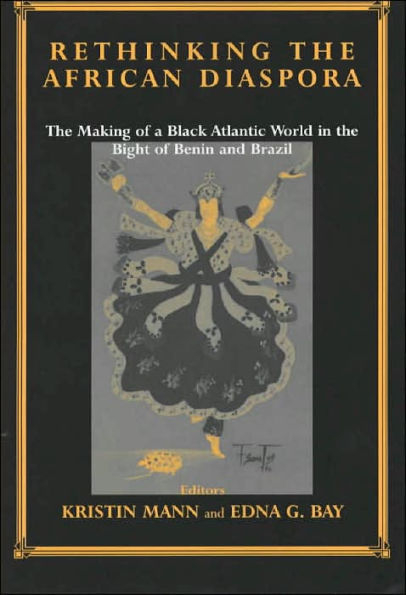
This interesting collection centres on the cultural exchanges in both directions between Brazil and the west coast of Africa. Many Afro-Brazilians resettled in Dahomey (modern-day Benin and Togo), the principal source for enslaved people sent to Brazil, and there were cultural exchanges along with trade, even after the end of the slave trade. These cultural exchanges persist to the present.
Kristin Mann opens the book with a thorough historiographic introductory chapter on shifting ideas of the African diaspora and the study of Atlantic history. She outlines a Black American intellectual tradition centred on the idea of a diaspora, a tradition parallel to White histories which have emphasized hybridity and syncretic cultures.
She also points out that slaves were traded north and east into Arab countries as well as west to the Americas (in passing, a very interesting arena for further research). She argues that the history of enslaved peoples in the Americas continues their African histories, not erasing it, pointing to several slave rebellions in Bahia that were effectively extensions of events in Africa.
Black sailors, soldiers, and freed slaves circulated people, ideas, and material goods throughout the Atlantic world. This remained particularly strong around religion - Christianity, Islam, and the Afro-Brazilian religion of Candomblé all exchange between Brazil and Africa.
The following chapters examine aspects of this continuing cultural exchange in closer focus and detail – a history of the Afro-Brazilian community in the city of Ouidah, the main port for slavers, a discussion of the slave trade as only one part of the larger history of the area, the in-between situation of Afro-Brazilians and their descendants as an ethnic group in various nations in modern Africa. In religious history the 19th century trade in the Koran in Rio de Janeiro, a comparison of contemporary Candomblé in Bahia and vodou in Benin, a historical chapter on 19th century Candomblé, and a chapter on the myth of Africa in the growth and development of Candomblé.
What is clear throughout is the continuity of culture and history between Africa and Brazil. The mix of influences on either side of the Atlantic differed – the various colonial empires and displacements in West Africa, and the Indigenous and European groups in Brazil – but the exchanges across the ocean significantly influenced the cultures and countries developing in both places.
In contrast to much scholarship on the Afro-Brazilian and Afro-diasporic religions in particular, this collection stresses the continuity between the African origins and the New World descendants and de-emphasizes their hybrid and syncretic qualities. An interesting collection that opens some new ways of thinking about the Afro-diasporic religions and cultural influences. The more I learn about the history, the more I appreciate the tremendous resilience and creativity of this diaspora.
~ review by Samuel Wagar
Editors: Kristin Mann and Edna G. Bay
Frank Cass, 2001
160 pg. Paperback £44 / $82 Can / $60 US