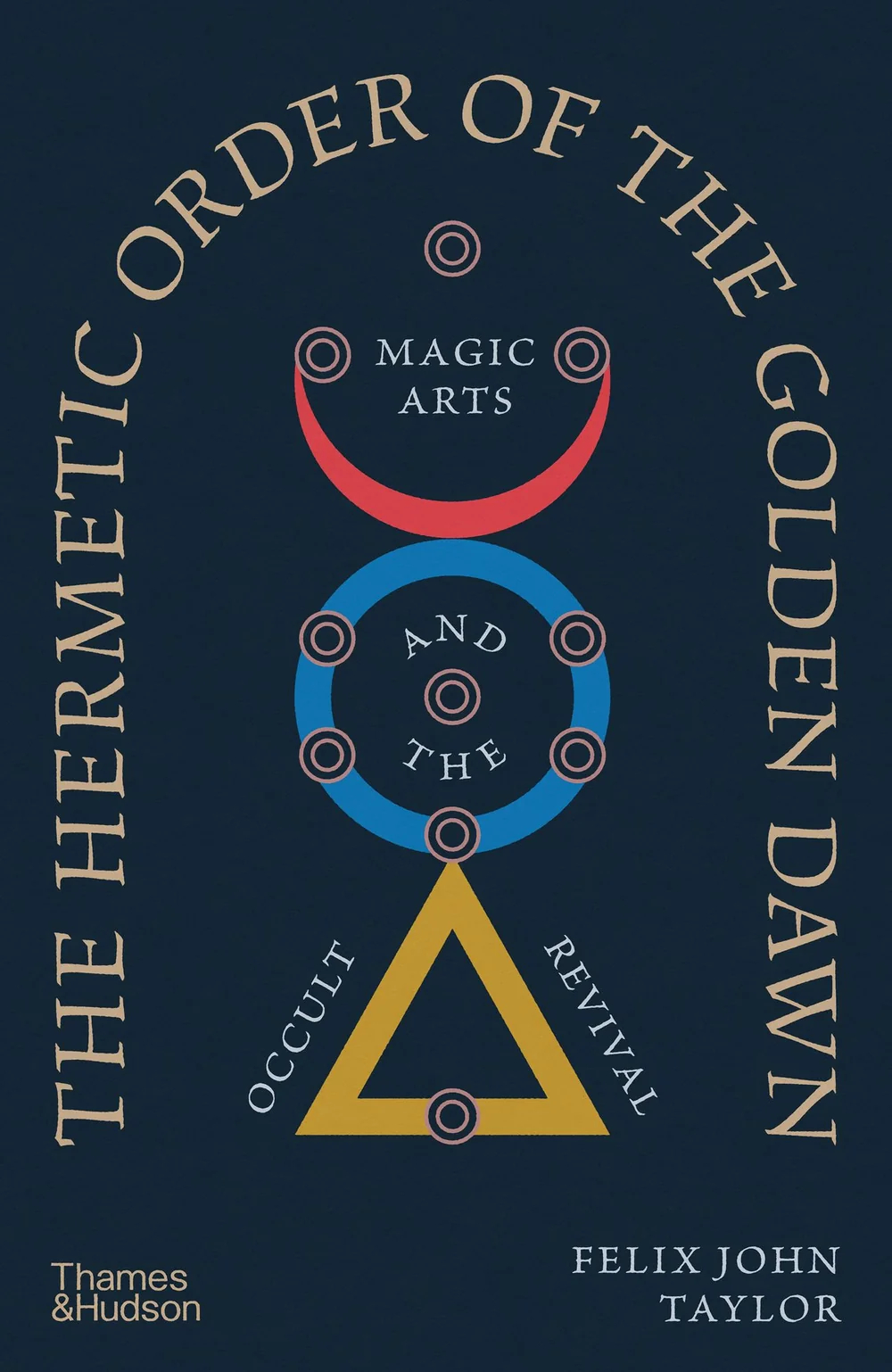
There are quite a few books dealing with the Hermetic Order of the Golden Dawn, which is rightly considered to be the rootstock of the modern occult (at least in the English-speaking world). It only existed for a short time, founded in 1888 and disintegrating in 1904, with several of its decay products lingering for another couple of decades. But it attracted a remarkable array of talented writers, artists, and cultural movers-and-shakers in the British fin-de-siecle and is rightly credited as a significant influence into modernist art and literature.
It is this cultural impact which interests Taylor, who gives very few details of the ritual and mystical theories and explorations of the Golden Dawn figures that he profiles. In a group of short biographies of prominent writers and artists who were involved in the Golden Dawn and the larger artistic milieu in which they moved, he shows how the GD was something between a artists’ salon and a formal space to explore art, ritual, and connections to ancient tradition.
Taylor approaches the Order through the friendships and collaborations formed through involvement in it. He traces its lasting impact through the lives and connections of prominent members W.B. Yeats, Florence Farr, A. E. Waite, Arthur Machen, Aleister Crowley and, after the disintegration of the Order in 1904, through its decay products such figures as Charles Williams, Dion Fortune, and Israel Regardie. These influences run through popular novels and poetry to the present-day work of magician and comic artist Alan Moore and musician Genesis P. Orridge.
He provides details of personality conflicts and organizational issues that plagued the Order and eventually broke it apart, controversies around making its teachings public which parallel current ‘closed practices’ discussions in the modern esoteric communities, giving human faces to these events. In his view, and I agree with him, the afterlife of the Golden Dawn to the present was only possible because its materials were made public by Fortune and Regardie.
Lavishly illustrated with numerous photographs and reproduced artworks (23 in full colour), well-researched despite a lighter, more gossipy tone, it is a worthy addition to my Golden Dawn shelf.
I particularly appreciate Taylor’s discussion of the significant role of fantastic fiction in occultism – it is not the dusty old grimoires that introduced most of us to this area, but Lovecraft’s Cthulhu mythos or Dion Fortune’s novels or, for the original Golden Dawn, Edward Bulwer-Lytton’s novel ‘Zanoni’.
~review by Samuel Wagar
Author: Felix John Taylor
Thames and Hudson, 2026
279 pg. Hardcover £27 / $52 Can / $36 US