Although when we think about history we most often think of the history of individual countries, separating out Canada from the United States, Brazil from Cameroon and so on, there are approaches which look at connections between regions, see flows of money, people, and ideas which shape history and culture. When the history of the Atlantic in the time of empires is viewed as an integrated whole, we can see things that otherwise would be obscure. We also can understand influences from the past that continue to the present day.
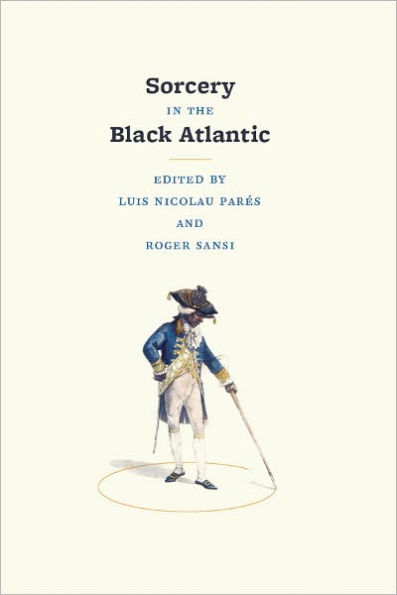
Sorcery in the Black Atlantic is a collection of papers, most translated from Portuguese, using this perspective to examine primarily the former Portuguese colonies and Portuguese involvement in the early phases of the African slave trade and the hybrid forms of sorcery / witchcraft that developed in Brazil and in Africa through these Atlantic exchanges and in the aftermath of decolonization.
In this excellent collection scholars explore modern-day sorcery in Brazil, Cuba, Cameroon and Angola, the history of witchcraft in anti-colonial resistance in Brazil and South Africa, ideological reinterpretation of sorcery as ‘pure African’ in Brazil and Cuba (which reminds me of the current controversy about ‘closed’ practices and appropriation in North America), the racist definitions that denied the syncretic borrowings from European Spiritualism into Candomblé in Brazil, and reflection on modernism as a form of magic which gives rise to new forms of witchcraft. I was most struck by, among other provocative ideas, the insight that capitalist commodity fetishism is a magical idea and that engaging with it creates new forms of magic as agency is transferred back from things to people and to social relations. The Portuguese word ‘feitico’, which became ‘fetish’, means ‘magic spell’, after all.
A common theme in many of these papers is that witchcraft is not a reactionary anti-modern tradition hearkening back to some golden age but a means through which modern women and men and marginalized communities adapt and find personal power and agency within modern societies. Magic is not Ren Faire cosplay but a practice of people who also will organize unions, vote, go to school, and behave in other ways as citizens of the modern state.
As recent scholarship into the European Enlightenment has show that prominent figures in science such as Isaac Newton were also magicians, and on modernism with magicians like Pound and Yeats prominent in the arts, and the present-day rise of women’s spirituality and Wicca, periods of cultural and economic transition embrace witchcraft in addition to pure reason. In Africa the push for democracy and the end of apartheid have created a transitional period where the postcolonial state and traditional authorities try to establish legitimacy in the face of growing inequality.
The integration of witchcraft ideas with the courts and everyday life, particularly in Brazil, is clear, as is the distinction between negative and positive magic (witchcraft and sorcery). In Brazil, as in much of Africa, the legal code presumed the reality of witchcraft, whereas in British colonies it was denied. The Brazilian elite sought to administer it, and some present-day African elites are using both witch-hunts and sanctioned witchcraft to consolidate state power.
One factor in the spiritual struggle around witchcraft is the rapid growth of Pentecostal Christianity in both Brazil and some African countries such as Angola. This faction of Christianity has a strong focus on spiritual warfare, belief in literal demons and spirits, and is a direct opponent of magic (while adopting magical techniques under other names) and an ally of the authority of the state.
This book is scholarly candy, albeit with jargony chunks imbedded among the sweets. There is a wide variation in ‘voice’, with some papers focusing on individual experiences, while others take a broader institutional view. There are few details of beliefs, ritual details or description and a great deal of reflection on the state of scholarship. I was delighted to open my brain up to another geography and discussion and my poor credit card is already financing research into contemporary sorcery in Africa and Brazil after reading it.
~review by Samuel Wagar
Editors: Luis Nicolau Pares and Roger Sansi
University of Chicago Press, 2011
300 pg. Paperback £25 / $48 Can / $ 34 US