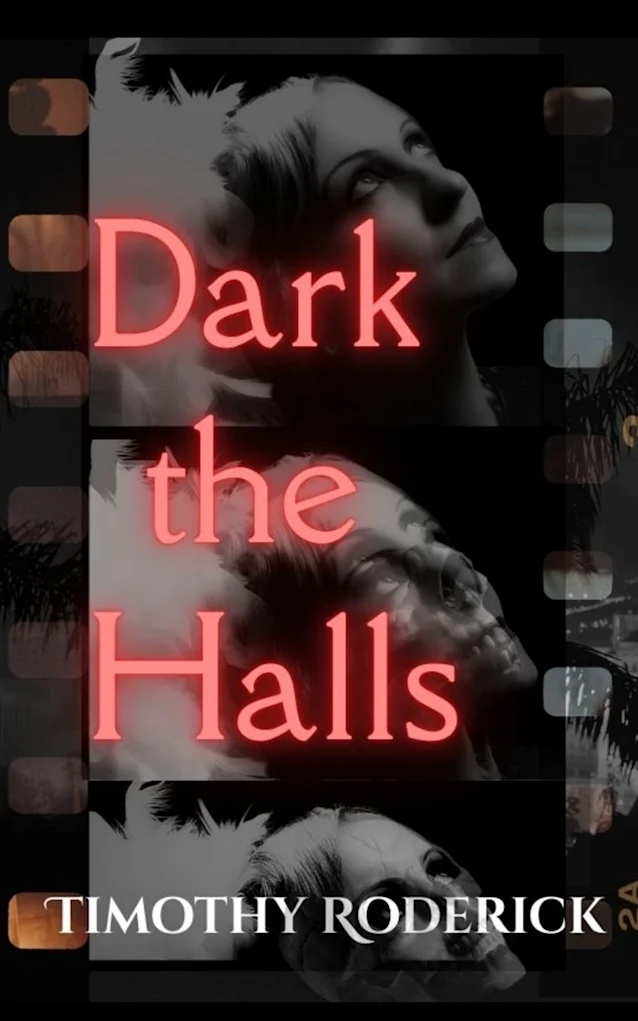
The latest novel from Timothy Roderick, Dark the Halls, makes no bones about what it is, which is to say gothic(ish) horror that uses Charles Dickens' 1843 classic A Christmas Carol as a launching pad. Indeed, the first chapter opens with a quote of the opening of its inspiration ("Marley was dead" etc...). However, this is no re-skinning of the exact story a la the movie Scrooged and probably a hundred other descendants. As I read, the idea that stuck with me is the musical exercise of variations on a theme; sometimes you can hear the original theme in a variation, but the most interesting examples maintain a slight tether while exploring entirely new spaces that are inspired by the source. Dark the Halls goes far, far afield of its theme while still maintaining that tether. I must confess, I am not student enough of horror (or, apparently, the classics) to know that a modern novel in the horror genre is not much of a departure from A Christmas Carol. Most people know about the ghosts, of course, and the rough shape of the story. But a read through of the source in preparation for this review made it clear that our author was in fact hewing to the mode of his inspiration. Granted, modern tastes require modern thinking, and so we have goat-footed phantasms wreaking havoc instead of dusty corpses floating about.
Our story is set during a stretch of the early 1930s in the United States, more specifically a Hollywood with the serial numbers very lightly scrubbed off. The "Scrooge" of the story is Bramwell Finch, one half of a movie-producing duo that set to work in 1920s and achieved some amount of success. I say he's the Scrooge character but it would be more accurate to say he is the essence of "bah humbug!" without nearly so much of the humanizing backstory of the original tale. This man's deeds are darker and he is far more set in his course. The language at the beginning of "Dark the Halls" feels very florid, almost like our author was harkening back to his source material, but it doesn't last. I'm honestly not sure if this is a failure of editing (noting a severe tonal shift) or an achievement in subtle tone-setting. In the spirit of Christmas, I suppose, I'm inclined to believe the latter, since there are no other oddities in the novel that I'd chalk up to editorial mistakes. In any case, the story unfolds over several years, but most of it is firmly rooted in the Christmas season. Holiday parties figure in, as do, eventually, hauntings mildly reminiscent of Dickens. (Although if any of the shades from Dickens were drinking blood martinis, happily licking the rim of their glass clean, I've forgotten it.) The redemptive note of the story is reserved for a pair of characters who, to stretch the exercise almost to breaking, are in the roles of Bob Cratchit and family.
The course of the story is original enough, and helter skelter enough, that any sort of summary is going to end up a trail of spoiler breadcrumbs that you'll resent having read. The tone of the book is modern horror, with that rooted-in-realism feel of some of Stephen King; grotesque acts of both mundane and supernatural invention occur within an otherwise "normal" world, which to my mind keeps them even more ghastly. Roderick never descends into camp horror-movie action with some violent enemy that our gang must overcome.
Dark the Halls is a brooding story that lets you simmer in the sinister world before letting you unwrap an upbeat ending that feels earned.
~review by Wanderer
Author: Timothy Roderick
Graven Image Press, 2025
229 pg.